Not long after I finished
PRAGMATA, I went to the cinema to check out
Mortal Kombat II and beforehand the previous 2021 film in preparation. While both films have their respective flaws, it did achieve my intrigue with the franchise.
Mortal Kombat as a whole I've known about for decades and I've even played
Injustice: Gods Among Us which is NetherRealm's DC fighting game so I'm familiar with their style, but I never played these games in general.
That's where the
Mortal Kombat Legacy Kollection comes in, which is a collection of games from the franchise thanks to a collaboration between NetherRealm Studios, Warner Bros, Atari and Digital Eclipse. The latter of which handled the emulation and preservation work to bring the various versions of the classic games for modern platforms.
This was also my first physical purchase for the Nintendo Switch 2, which is my chosen platform for retro video games especially of this graphic style. I played through most of the games in the collection for the first time and as they were released independently as their own games I also considered them as individual game completions in return. Now my completion for each game is solely based on reaching the end of the Arcade mode than pursuing different character endings as I'm more of a casual player with the franchise.
Starting off with the very first
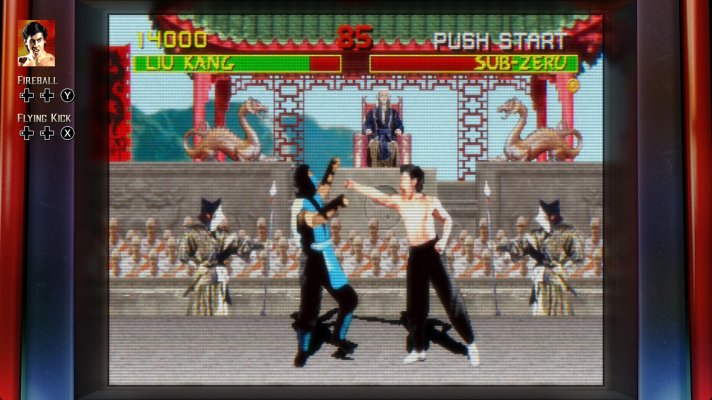
Mortal Kombat from 1992. I decided to go with the Arcade version which graphically looked the best and played the best across the versions I tried (and I did the same for the later games in the series). The gameplay is interesting as you fight with different stances and combos to ensure a greater chance of defeating your opponents and the AI is pretty solid for the most part. Whilst I struggled a lot, I managed to overcome the challenges once I got used to some of the attack moves, like having to kick them from beneath than just spamming punch because they will block you quite easily.
I tried different characters and for the most part the basic attack moves were pretty much identical, with the main differences other than their appearances being the combos. For example Liu Kang can perform a high kick and fireball while Sub-Zero can freeze people. The most challenging part of the arcade mode was fighting Goro because he would constantly knock off your health instantly so you had to rely on a different strategy to defeat him, so for me it was Liu Kang's high kicks which helped but it took numerous attempts. Shang Tsung was also a challenge but nowhere near as messy as Goro's. Overall despite having a small roster, the first Mortal Kombat was pretty good and graphically looked great with its artwork and sound design.
Then we move over to
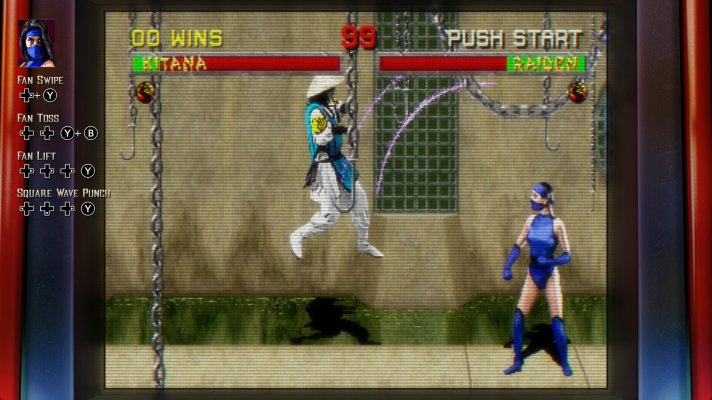
Mortal Kombat II from 1993. I did consider the SEGA Mega Drive and Super Nintendo versions but both of them were surprisingly difficult and from what I read online, the AI was absolutely ruthless and will instantly beat the living heck out of you right away. It was also the point where I had to modify the game settings to tone down the difficulty to the easiest one which I know is a sin for many hardcore fans but it was the only way for me to navigate through the game's hardcore difficulty.
The character roster is just bigger this time and the graphics have been updated, but the fatalities are the highlight with this sequel as it's more noticeable this time around. I tried different characters and many of them have their own special moves. I also tried Raiden and Kano which were both amusing, but the favourite for me was probably Katana with her move set which was pretty fun to control.
Because I did tweak the game's difficulty I did manage to make my way through to the end of Arcade mode, and while I can see why many loved this game when it was first released, the difficulty is what ruined it for me personally so if I had to choose between the first and second I would actually go with the first game. It will probably be a different vibe if you were going up against a human opponent though.
A few days later I eventually played
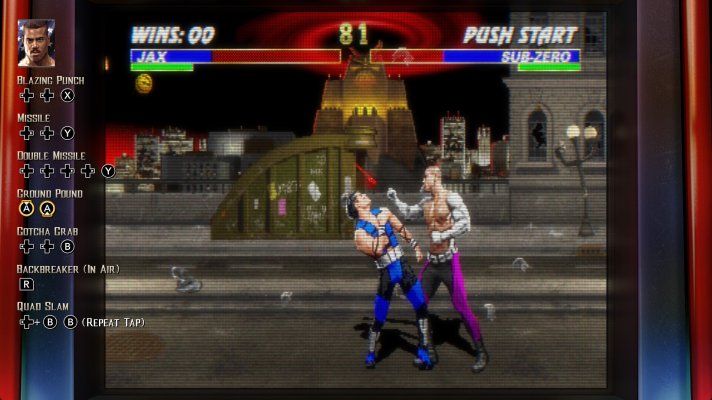
Mortal Kombat 3 from 1995. This one was considered controversial by fans due to making a lot of changes to its mechanics whilst also removing a couple notable characters from its roster including Raiden, Johnny Cage, Kitana and Scorpion (Sonya and Kano do return to the roster though). I once again went with the original Arcade version as I enjoyed the experience with the previous games in this collection.
With Arcade mode, you can now choose a route of your choice which consists of Novice, Warrior and Master and each route (or "tower" as many would call it) adds additional fights. For this playthrough I selected the Novice route. In terms of new gameplay mechanics, one notable feature is running which allows you and your opponent to quickly get back to you which I never managed to ultilise very well with my gameplay skills because the opponent would always strike back when you get close to them. The game also included new finisher moves like Friendship, Animality and Babality. Friendship is like a light-hearted way of defeating your opponent, Animality is Fatalities but with animals, and Babality is turning your opponent into a baby which adds to the game's humour.
For my playthrough of this version of the game, I found the difficulty a lot more tolerable compared to Mortal Kombat II which was good so I didn't need to adjust the settings this time around. I also checked out different characters, including newcomers like Sektor, Nightwolf, Sheeva and Kabal, everytime I lose a battle to change up the combat.
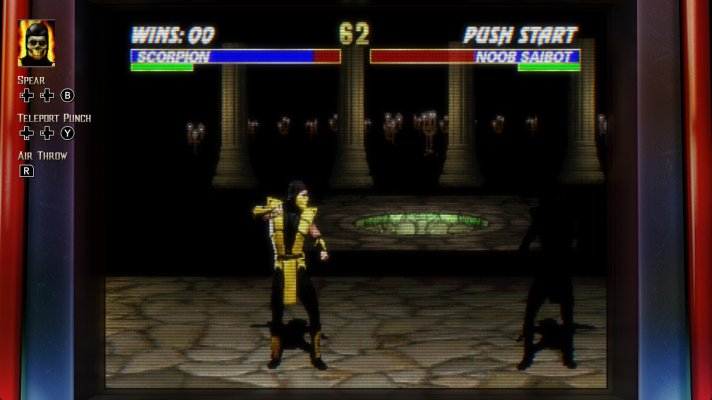
Then I checked out the first updated release
Ultimate Mortal Kombat 3 that released later in 1995, which according to the developers was made to support the Arcade scene whilst consoles were just about to receive the original.
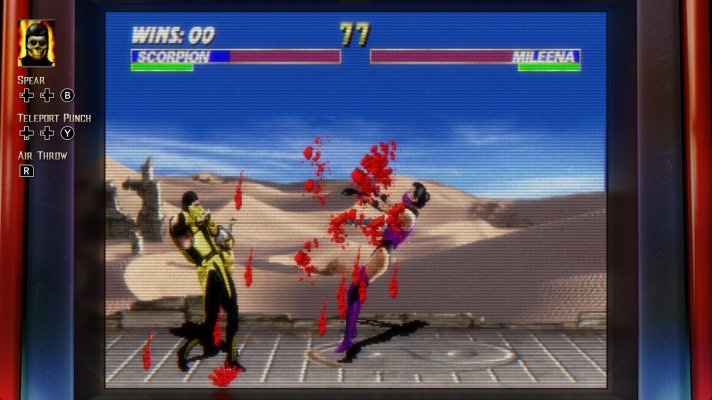
One of the biggest changes here is an increased roster, so fan favourites Kitana and Scorpion come back alongside Reptile and Mileena. Ermac was originally a name used to check data on the Arcade machines became a myth in the community so the developers turned it into reality by making a character for this release as well. Classic Sub-Zero also makes a return, as in this instalment he's presented differently so you almost wouldn't recognise him without the iconic costume.
There are additional gameplay modes and stage variety to add more content to the mix. The developers also adjusted the AI and modified character move sets. In the Arcade mode, I switched it up and went with the Masters difficulty, though the second tallest tower of the four available, so I was up against a lot of foes that were pretty tough to defeat as they will wreck you especially if you make mistakes or don't block quickly enough. On these tougher difficulties there's also the Endurance stages where you have to fight more than one opponent without losing a round. It got to the point where I had to settle with Scorpion to manage some situations.
Also included in the Legacy Kollection is the WaveNet version, which was considered by many fans in the community to be lost media as it was made for the WaveNet device that allowed people to play against other players online throughout the world. This version also has additional adjustments, including a playable Noob Saibot, so it's considered the latest version for the Arcades. I didn't play this version to the end of the Arcade mode but it's great to see this is now accessible again.
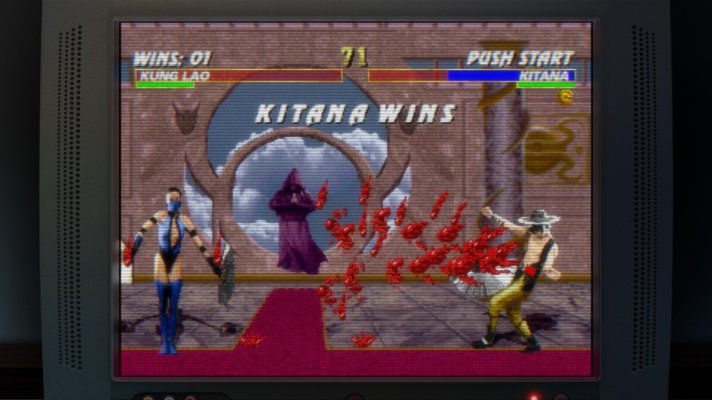
Next we have the second updated release
Mortal Kombat Trilogy from 1996. This one was released for the original PlayStation as well as the Nintendo 64, but the version available in this collection is the PlayStation one. Developed by Avalanche Studios with Midway, this is a pretty interesting version because the newer technology (CDs with PlayStation for example), provided developers with more space that they can use to expand the content even further.
This meant that they were not only able to expand the roster to include pretty much everyone from the previous games and versions, including the likes of playable bosses like Goro and Shao Kun plus others like Johnny Cage, they could also utilise assets from the first two games as well which fits in with naming the collection
Mortal Kombat Trilogy.
There's a few adjustments to the content. An Aggression mechanic that fills up which upon succession, boosts the players attack and speed during combat. There's also a new fatality type called Brutality which is a hefty combo move to accomplish. In the arcade mode I went with the Warrior difficulty and mostly played with the newer character additions. Goro can't do fatalities but his punches do some decent damage though he's useless against Shao Kun so I switched to a different character like Kano to get through his attacks.
Overall
Mortal Kombat 3 was a pretty solid game in general and each update adds more value to the mix. If I had to pick and choose which version to go for I would probably stick with
Mortal Kombat Trilogy mainly because there's an expanded roster and more options and content available to keep you going.
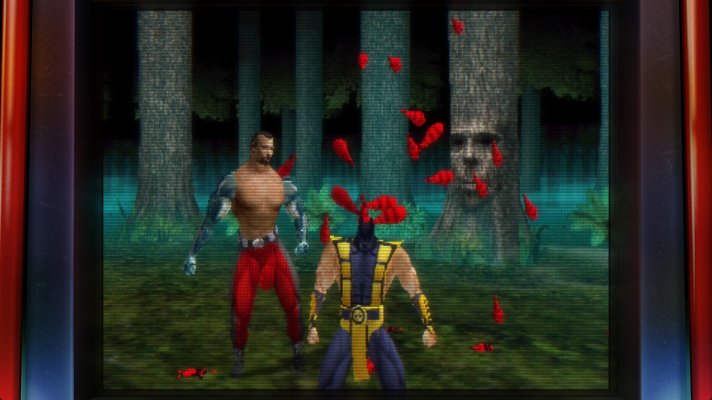
Then we move onto the next mainline instalment with
Mortal Kombat 4 from 1997, which is also the franchise's first entry into the 3D scene. I didn't know what to expect going in because this is probably the one I knew the least considering I didn't see anyone talk about this game that much. The version that we have available in the collection is the original Arcade Version 3 release and while this game has been ported onto the PlayStation and Nintendo 64 we don't have the console versions here (likely due to emulation challenges).
The biggest difference here is that everything is in 3D models including the characters which makes the game more modern for its time. Since we're no longer in a 2D type environment, the characters can now step back and forth from any angle if you use the correct prompt. The maps include familiar locations which have all been remodelled into 3D as well which look good. The character designs themselves I suppose you could say have less detail as they're not as realistic as previous games but they look good enough considering its on newer specs.
Surprisingly I had a solid time with the gameplay. It's still utilising the same control system with low and high kicks and low and high punches, plus the special moves and finishers you can pull off at the end of the two round setup. There's also a few new additions namely with each character now owning a weapon of their own that you can enable during combat and there are sometimes objects within the arena that you can use to throw against your opponents too. Other than that we have new animation related to specific moves including one where you can break your opponent's leg and they make a sound which is rather entertaining to see, especially if it ends up being the finisher move for the match.
The story includes 3D cutscenes as well as voice-over work which are intriguing to see, and when you finish the Arcade mode, each character will have their own unique cutscene like Scorpion discovering who killed his family as an example. I'm in a minority when I say that I really liked
Mortal Kombat 4 and had a good time with it. The difficulty was surprisingly balanced and not as hectic as the earlier games so you can get through most of the battles without too much struggle. Some characters may not be as good against one opponent as the others but all you can do is either get better with the current character you're playing or switch to a different one that better suits your style.
Next I decided to play the spin-offs. I did try out the Game Boy Advance versions that we have in the collection but I decided they weren't for me and didn't count them for any game completion. The developers produced two spin-offs for the original PlayStation and both received pretty mixed to negative reviews due to various factors, but thanks to this collection these issues may be manageable this time around.
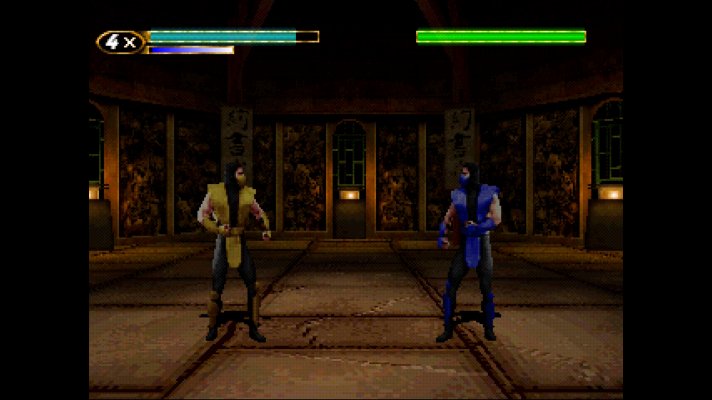
The first spin-off in the collection,
Mortal Kombat Mythologies: Sub-Zero, was released first in 1997 and it's an interesting design choice by Midway because they were blending 2D artwork with 3D backgrounds, so it's similar to
Tomba! in its design aesthetic. The game also ultilises live-action FMV cutscenes which were honestly pretty decent even though these aren't professional actors, but adds a fun charm and dedication. But more importantly is the game any good? Well to put it bluntly... it's a bitch.
This is a very difficult game and it does not hold your hand at all. With no instructions, the game assumes you already know the controls as they're almost identical to Sub-Zero's move set in the mainline series but the sole difference here is that you have to manually reposition him to which direction you are facing, whether it be left or right which does mess you up in combat. Now the good news with the Legacy Kollection version is that there's an optional toggle to use the Right Analog Sticks for that which I enabled and it's pretty effective. You can also use Left Analog Stick to move around but I mainly used the D-Pad because the combos work better.
The enemy variety was pretty low and sometimes they respawn which can be annoying especially in the final level, and the traps are pretty amusing which can lead to a lot of hilarious insta-death moments. Now if you were playing this on the original hardware, you'll be raging a lot which is why this Legacy Kollection alone makes the experience more tolerable thanks to the rewind feature which I had to abuse a lot. Surprisingly I didn't end up with a game over as I was able to receive more lives during my progression (and the collection also has a toggle for infinite lives which I didn't enable).
The story was fine and the game took a couple of hours to complete, but would I recommend this spin-off? I would say no. While the Legacy Kollection makes the game more playable and tolerable, I found the combat to be sluggish and the AI can be annoying to where it will easily counter/block your attacks especially during boss fights. While you do have items and special moves to help support your progression, it's not aged well overall.
Next we have the second spin-off in the collection,
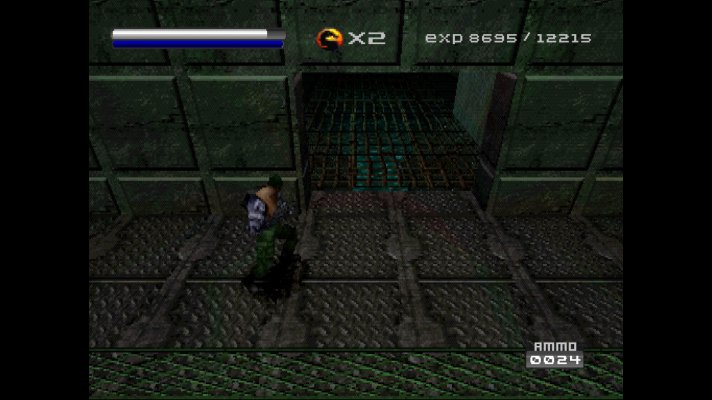
Mortal Kombat: Special Forces, released in 2000. This is also another interesting addition to the franchise because it actually does feel like a separate game but with the
Mortal Kombat characters and move set. The camera stood out the most as it's almost like a top-down type experience as you progress through the levels, and the combat had been updated to support a 3D environment. The game also starts you off with just only having basic attack moves, before you unlock more combo moves as you level up your character that can help switch up the experience.
Another big surprise for me was the difficulty of the game, because the franchise in general was pretty difficult to progress and the previous spin-off was ruthless to an extent, but here it felt they were mirroring the difficulty you experience with other traditional action adventure games on the original PlayStation. When enemies attack you, they don't take away tons of your health which makes the journey so much more tolerable, and while you can use weapons like a machine gun and grenade launcher, it's not too crazy but you do get stun-locked at times which can put you in a bad position.
The boss fights were also fairly challenging but ironically you can stun lock them into position by constantly hitting the basic attacks so they can't get away which was honestly pretty entertaining and I only had to do that for around half of the fights. You also have tons of healing items, can pick up ammo for your weapons that you can use at any point (there's even a first-person view available for one of the buttons) and you can store as many items without any restrictions which the previous spin-off did have. I did ultilise the rewind feature from the Legacy Kollection but it was only for specific moments where I was caught off guard by enemies using weapons from a distance.
But the more important question is whether or not this is actually a good game or bad game. Personally I don't think this is a bad game at all. Yes the story was pretty basic, yes there are a lot of empty corridors and yes it feels rather dull in parts but honestly it's nowhere near as bad as it sounds. The graphics were pretty decent and the combat controls worked pretty well. The presentation also reminded me of
Syphon Filter in a way but without the cel-shaded art style. The PlayStation CG cutscenes looked cool. The game overall was about under four hours long but you can crit-path the playthrough in about an hour from what I saw from folks who played the game non-stop. As a
Mortal Kombat game I can see why fans were disappointed, but as a traditional action adventure game for the original PlayStation it's rather harmless.
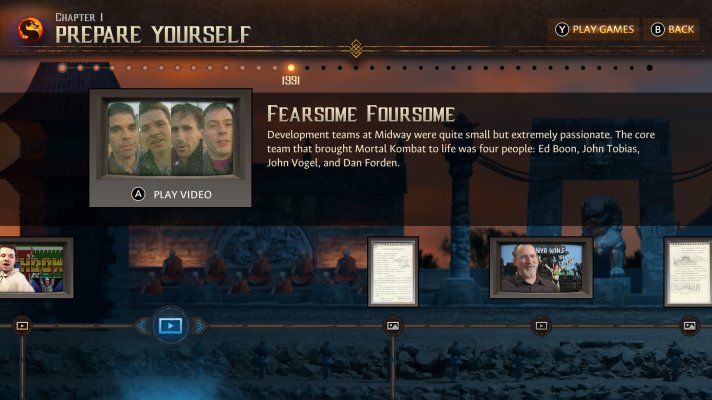
With the games played, I also want to mention the other side of the game's content - the documentaries. If you aren't familiar with Digital Eclipse's recent works, they have put in a lot of effort in the behind-the-scenes, making-of and interviews as well as archiving and preserving classic promotional material, scans of the box art and designs to give you a proper look at the history of the games, and
Mortal Kombat was no exception.
This collection does a brilliant job going over the origins of the franchise, the lead up to each game like different character poses to work with and new designs, and also includes various snippets and videos including advertisements that promote the games for the Arcades and the classic 28 minute making-of Midway made for
Mortal Kombat 3. The documentary also explores the other areas of the franchise including the live-action 90s film and the Live tour they did.
While the documentary goes over many of the games in this collection, it does stop sometime after
Mortal Kombat 4 so for example they don't delve into the history of
Mortal Kombat: Special Forces too much or any games that came after, but they do a brief recap of what happens after. I suspect if this does super well, they're probably saving it for a second collection.
This documentary took about tons of hours to finish which was a lot, and they are optional, so you can just go straight into playing these games or start with the documentary it's entirely up to you on how you want to proceed with this collection. There's also online multiplayer which I didn't check out as I don't have a Nintendo Switch Online membership.
Overall,
Mortal Kombat Legacy Kollection was a very entertaining collection of classic fighting games and intriguing spin-offs. I had a solid time and according to my Nintendo Switch 2 I spent about 18-20 hours of playtime exploring all of the games that I had played and the documentary in this collection. While the Nintendo Switch 2 physical doesn't have
Mortal Kombat 4 on the cart, I still think this version is a solid one to go for.