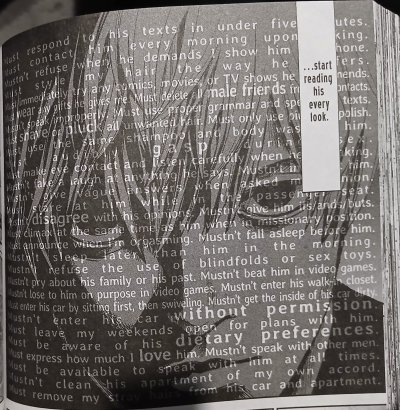
Adabana Volume 3 brings the story of Mako and Mizuki to an end, finally showing us what happened on that fateful day.
Continue reading...
Continue reading...


I think mangaka NON has gone about this in a rather smart way because we get to see the truth of what happened with Mako just over the halfway point of the book and then get to spend a significant amount of time in the present following her attorney, who is still trying to piece everything together.
Rather than Volume 2, where it felt like a lot of the twists and turns were for the shock factor, #3 returns to a lot of what I liked about the first instalment. We’re still shown plenty of horrific events, but there’s purpose in what’s being portrayed and how Mizuki is handling it all. It feels like the whole thing holds together better and makes more sense. Although I imagine readers will be divided on how they feel about the truth behind Mako’s death.
While I feel it was important narratively that we return to the present day sooner than later, one downside of this is that we still don’t get to know her attorney very well, and a lot of his scenes feel almost like comic relief. He has a job to do and he does it, but the tone is more humorous than anything else in this series has been and it just doesn’t fit in. It’s almost like NON became aware too late in the process that this series had been far too dark with little reprieve.
Having said all that, now we’re at the end, and I look back over the whole series, I don’t regret reading it. I don’t think it delivered on the initial promise it showed, but as someone with an interest in the mangaka, I enjoyed seeing the contrast between this and their other work. As a standalone series outside of that, it’s hard to recommend. If you’ve made it this far, it’s worth finishing, but I think on the whole if you haven’t started it yet and wouldn’t be interested in it based on the creator as I am, then there are several other mystery series that are more consistent that you could read instead.
Overall, Adabana has certainly been an interesting experience even if it hasn’t always been good. I think that dip in the middle with Volume 2 and the oddly timed comedy elements here have ended up taking away from the bigger picture, which is a shame given how much promise there was in Volume 1. Difficult to recommend as it may be, it wasn’t terrible on the whole.
 " (translation note: keikaku means plan)... but given her loathing of controlling sociopathic men, decided she'd write a series where Light gets keikaku'd. The antagonist, Akatsuki, bears a striking resemblance to him, and even more so in v3 when in a suit; gesticulating and finger pointing, panicking/angry.
'Tis a shocking revelation but mein view is near enough the exact opposite. I do however understand why you'd be more invested in heroine Mizuki and the murder. Volume 1 (somewhat by design, given the unreliable narrator/pov) did not initially promise much more to me than being entertaining schlock, with excellent (and oft smutty) art, as a school girl killed. My kind of trash, with a psychological edge and enough mystery to compel. Something akin to Viz's Boy's Abyss. But there were too many holes, and the... hentai uncle trying to fill some with reap porno dialogue out of nowhere was the true shock value for the sake of shocking, I'd say.
See, I appreciated the other pov, but it falls out of place in how it's all depicted in contrast to Volume 1. And some of that is down to the character perspective, sure, but I feel the editor(s) allowed NON to lean into the style of depiction that didn't fit the overall piece. It's hard to feel much for any of the cast when all the horrific things are so in your face so consistently. Volume 1 at least took the time to have a chapter or so without such an event being placed in front of the reader. If we'd started that way in the first release, that's one thing, but we didn't. I'm not sure why we're calling this shoujo-gone-seinen btw, as the author has never done anything but seinen works.Thus, I approved of volume 2 re-framing the narrative by switching to Mizuki's friend Mako's pov, 6months prior. And this I feel is where the author shifted from a murder narrative outside of her comfort zone, to something far more authentic. Her afterword alluded to it but the way Mako's character was love-bombed/seduced by an older guy, then controlled and abused, felt to me almost like the author was inserting her own hell into the story; making it immediately relatable on a human level, despite my manliness. The stalking issue that Japan has a history with is why I assumed Dark Horse licensed it and 'tis more well-known than it otherwise would be. Short shoujo-gone-seinen not really their typical ballpark.
I do agree there were a numbers of stretches, but in the end I concluded that at least an attempt was made, and I am more or less satisfied with that. I think it would have been worse if Mizuki had gotten away with everything and spent no time in jail for her crimes and because that wasn't the outcome, I was okay with it. And really the dumbest thing was that her actual lawyer is pretty useless; it all comes to the secondary one to actually get anywhere. Which she almost certainly couldn't have predicted, and what would have happened if not for her? lol. I can only agree that that element just doesn't hang together well under scrutiny.Now, as for volume 3, I do agree it was nice to get back to the present, and see where it all leading. My disagreement there is it all making sense: Mizuki's plan honestly seemed like the author read Death Note, decided she liked Light's "Just as keikaku
The problem with all this is, Mizuki's plan does not add up, almost from the get-go when Mizuki ends up going down this path trying to delete porn of Mako, to protect her dignity... ignoring the fact it had been sold on the black market/dark web already. And later, as if struck by a bolt of lightning after finding Mako's body, suddenly deciding the best course of action is to saw off her hand/head (the author has clearly never tried sawing through necks, or tree branches). SOMEHOW, she knew t'would lead to Akatsuki's downfall. The best/worst part is the head removal never came up in court--only the hand. Mizuki also just knew the autopsy would support her misdirection that stab wounds to the torso after death would be the cause of death. Plus, her whole masterplan seemed revolve around hoping her FREE* lawyer(s) would look into her lies, fiinding dash cams that weren't deleted (after having told Akatsuki to delete everything), and many other okden stretches of belivability that hurt my poor head.
I concur that the lawyer humour oft felt misplaced; alongside things like the female lawyer's workout routine on a video call. Her character seemed thrown in just for humour, even. Typing of... misplaced things, the very first page of v3 was an all-timer as first pages in murder thrillers go: Mizuki and Mako fully nude in the shower, with Mizuki showering Mako. I approved strongly, but still...
You mentioned the contrast between this and Non's other work: did she do more smutty, comedic things in the past? (and where can I find these, if so!?1!) Her aptitude for titillation amidst dark subject matter was... something. In fact, her art was the main draw; sharing more with seinen stylistically than the shoujo female authors typically opt for. It kinda worked in v2 given the non-consent porn angle as it hammered home why Mako would mentally breakdown over such explicit recordings being seen.
Boy's Abyss is a good comparison, actually, but I feel Boy's Abyss is much more... unhinged? (I suppose) the whole way through, which helps with the overall believability of it. In which there is none. Whereas I think this started out more grounded and slowly unravelled in some ways. But that's not a criticism of Boy's Abyss either; I do very much enjoy that for the stifled small-town problems akin to something like The Summer Hikaru Died.
See, I appreciated the other pov, but it falls out of place in how it's all depicted in contrast to Volume 1. And some of that is down to the character perspective, sure, but I feel the editor(s) allowed NON to lean into the style of depiction that didn't fit the overall piece. It's hard to feel much for any of the cast when all the horrific things are so in your face so consistently. Volume 1 at least took the time to have a chapter or so without such an event being placed in front of the reader. If we'd started that way in the first release, that's one thing, but we didn't. I'm not sure why we're calling this shoujo-gone-seinen btw, as the author has never done anything but seinen works.
I do agree there were a numbers of stretches, but in the end I concluded that at least an attempt was made, and I am more or less satisfied with that. I think it would have been worse if Mizuki had gotten away with everything and spent no time in jail for her crimes and because that wasn't the outcome, I was okay with it. And really the dumbest thing was that her actual lawyer is pretty useless; it all comes to the secondary one to actually get anywhere. Which she almost certainly couldn't have predicted, and what would have happened if not for her? lol. I can only agree that that element just doesn't hang together well under scrutiny.
Her other main work are Harem Marriage (which I haven't read yet, but seems to tackle some darker/more difficult themes); this seems to be digital only from Kodansha. And then there's her current ongoing series Pole Star, which I have been reading since it started (and before Adabana came to English). Pole Star isn't yet licensed sadly, but this does have a more comedic tone in general and tackles very little in the way of dark material. There's some eroticism due to the nature of the dances, but it's reasonably light on that generally. And that's what made reading Adabana so interesting for me because they're very different in that sense. I appreciate Adabana is a little older, but it's the latest prior to Pole Star, so I was surprised by how polished Pole Star feels in comparison.